An ancient healing technique using mindful movement exercises, controlled breathing and visualizations to affect the various subtle energies of the body.
What is it?
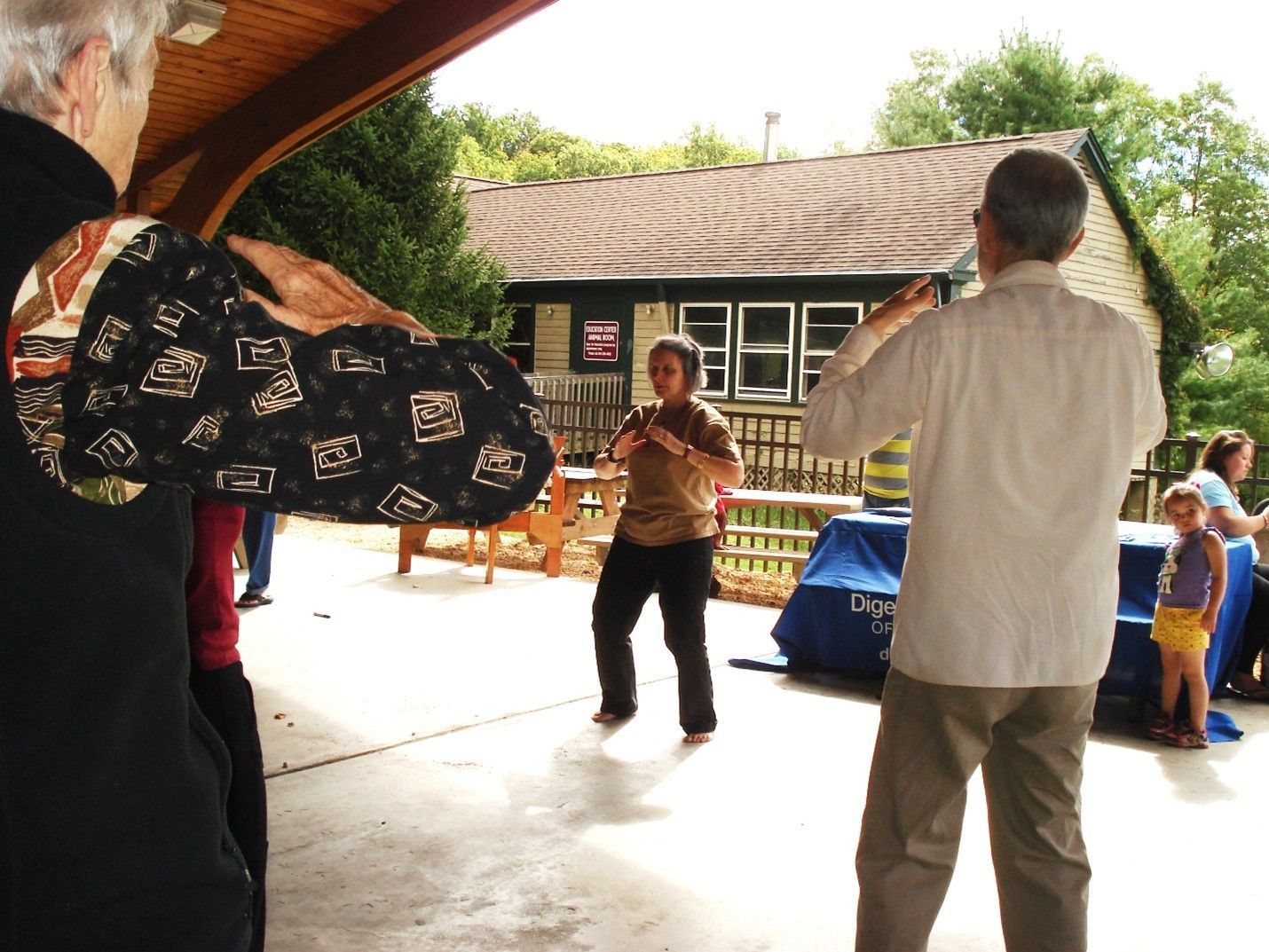
Qi Gong is about getting in touch with your nature, body and mind. The movements are fluidic and expressed as meditation in motion or as mindful stillness. Anyone, at any age, can practice Qi Gong regardless of their mental or physical limitations.
Qi, pronounced chi, is often translated as life force energy or breath. It is that vital force that makes life exciting, fun, creative, and joyful. Instinctively we know that the more energy we have, the better we feel.
Medical surveys show that lack of energy and high levels of stress are the biggest complaints in physicians' offices today. Gong is a general term meaning ‘work' or ‘skill'. Hence the term “Qi Gong” may be translated as 'breathing exercise' as well as 'energy work.' The subtle skill of breath control is one of the keys to circulating the flow of internal energy in the body.
Qi gong amplifies the internal energy of practitioners, enabling them to become full of vitality, healthy, emotionally balanced, “grounded" and spiritually connected. This creates inner balance and harmony that leads to longevity and a deep sense of purpose in life. People watching qi gong often only see slow graceful movement or simple stretches. People often ask, “How can that get you in shape or train you to be a better martial artist?” But, there is a lot more to qi gong than meets the eye. Like an iceberg, what you can see and witness in a qi gong practice is only the surface of a much deeper and potent internal power.
From that place of power, you can bring forth whatever it is that you want to experience.
Assists With:
Overall Wellness
Insomnia
Fatigue
Stress & Anxiety
Chronic Pain
What to Expect:
Qi gong is simple: it requires no equipment, little space, and can be practiced in a short amount of time.
Your instructor will guide you through energizing, strengthening, stretching and flowing movements as you practice mindful breathing. You can perform the movements on a rug or mat, wearing loose, comfortable clothes. As you practice, you’ll become more comfortable tapping into your own inner resources and working with your own internal energy. Begin by practicing in a group setting or in a private lesson.

To try out Qi Gong in a class setting, visit the Classes and Events page.
Private Session – One Hour $75.00
Class Settings – please refer to Classes & Events page for fee.
What is Qi Gong?
Qi Gong is an ancient healing and wellness practice that combines mindful movement, controlled breathing, and visualization to work with the body’s internal energy. It’s often described as “meditation in motion” and can also be practiced in stillness. It was originally named as Yangsheng (养生), translating to "nourishing life," is a 2,500-year-old Chinese philosophy and self-care practice focused on maintaining health, preventing disease, and promoting longevity by nurturing the body.
What does “Qi Gong” mean?
“Qi” (pronounced chi) refers to life force energy or breath — the vital energy that supports physical, emotional, and mental well-being. “Gong” means work or skill. Together, Qi Gong translates to “energy work” or “breathing and movement practice.”
Who can practice Qi Gong?
Almost anyone. Qi Gong is gentle, adaptable, and accessible to people of all ages and fitness levels. Movements can be modified for physical limitations, and no prior experience is needed.
What are the benefits of practicing Qi Gong?
Qi Gong is commonly practiced to support overall wellness, reduce stress and anxiety, improve energy levels, ease chronic pain, support better sleep, and promote emotional balance. Many people also experience a greater sense of grounding and mental clarity.
How is Qi Gong different from yoga or exercise?
Qi Gong focuses less on physical exertion and more on cultivating internal energy through breath, intention, and fluid movement. While the movements may appear simple, the internal effects are deep and powerful — working on both the nervous system and energetic balance.
What happens during a Qi Gong session?
You’ll be guided through slow, flowing movements, gentle stretches, and mindful breathing. Sessions focus on relaxation, energy circulation, and awareness rather than pushing or straining the body.
During each session Self-Massage & Bodywork: Techniques are instructed to boost circulation, such as brushing, tapping, or massaging acupressure points.
Do I need special equipment or space?
No. Qi Gong requires no equipment and very little space. You can practice on a rug or mat, standing or seated, wearing loose, comfortable clothing.
How long is a typical Qi Gong session?
Sessions can vary in length 45-60 minutes, but Qi Gong can be practiced effectively even in short periods of time. Whether in a group class or private session, the focus is on quality of movement and breath rather than duration.
Can Qi Gong help with stress and fatigue?
Yes. Qi Gong is especially effective for stress reduction and restoring energy by using the breath efficiently. Many people practice Qi Gong specifically to manage anxiety, combat fatigue, and reconnect with their natural vitality.
Should I start with a group class or private lesson?
Both are great options. Group classes offer shared energy and guidance, while private lessons allow for personalized instruction. Your instructor can help you decide which approach best supports your goals.