What is it?
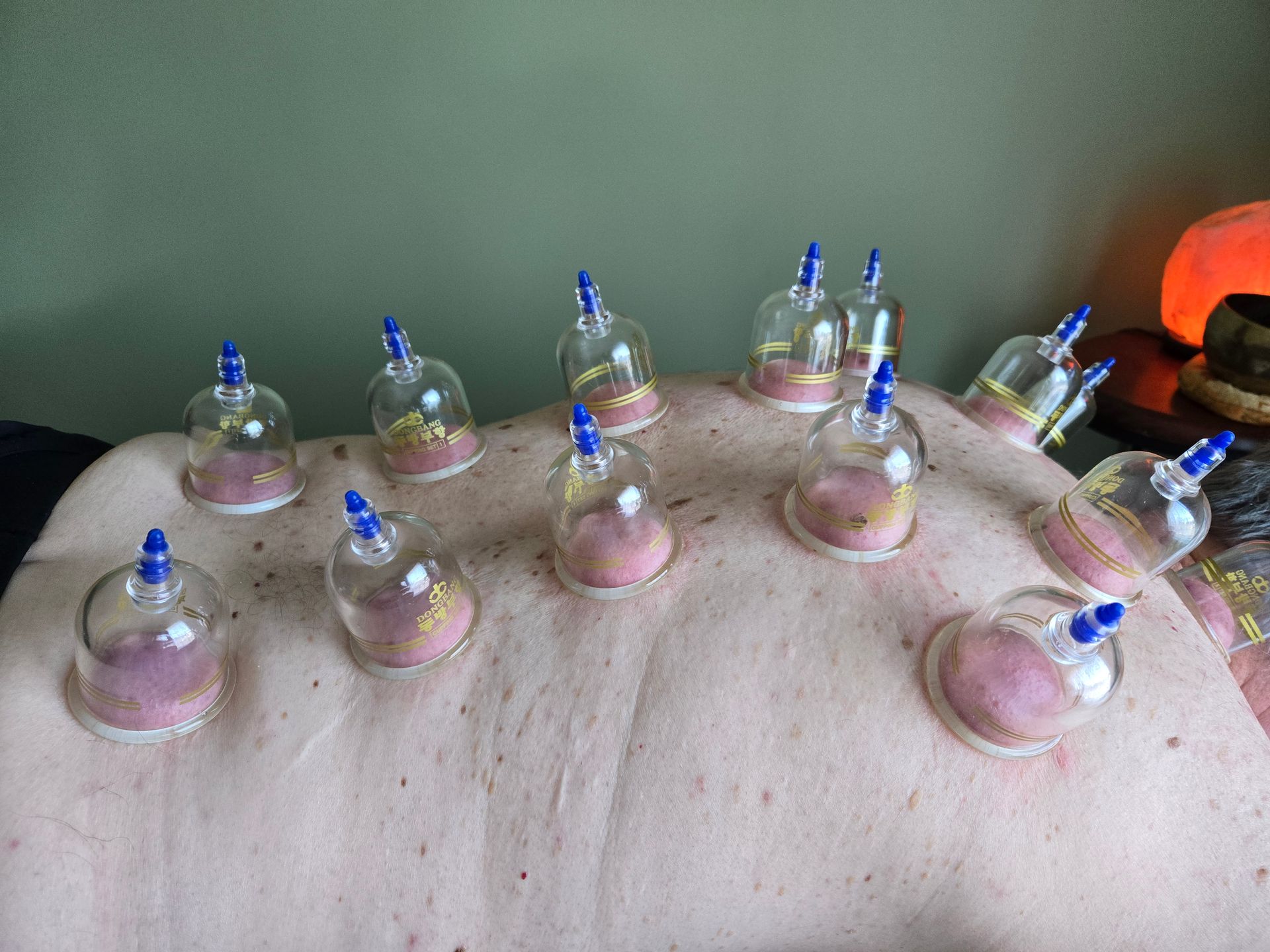
Using suction through air pump inside cups to draw toxins out of the body, improve blood flow and loosen muscles. Ask about this treatment during a wellness consultation. $20.00
HIGHER DOSE MAT – with PEMF, Far Infrared Heat, and Amethyst Crystals - $20.00
Assists in accelerating holistic recovery, reduce stress and support deep sleep, increase energy and boost mood. Ease sore muscles.
Settings are individually determined depending upon what the client is looking for; grounding, higher energy or focus.
Frequently Asked Questions
What is Cupping Therapy?
Cupping therapy is an ancient healing technique where suction cups are placed on the skin to create a vacuum that gently lifts the skin and underlying tissue. It’s used to support muscle relaxation, ease tension, and promote localized circulation.
How does cupping work?
The suction draws blood to the surface of the skin in the targeted area, which can help increase circulation, encourage tissue relaxation, and support the body’s natural healing response.
What can cupping therapy help with?
People often use cupping for muscle tension and soreness, back and neck pain, joint stiffness, inflammation relief, range of motion improvement, and overall relaxation. It’s also popular for athletic recovery and supporting wellness routines.
Does cupping hurt?
Cupping shouldn’t be painful. You may feel gentle pressure or pulling where the cups are placed. Some people feel deep relaxation or mild discomfort if muscle tension is high, but it isn’t a painful procedure.
What will my skin look like afterward?
You can expect circular marks or discoloration where the cups were placed. These marks look like bruises but are usually harmless and typically fade in about a week or two.
Are there side effects?
Common temporary effects include skin redness, light bruising, or swelling at the cupping sites. These usually resolve on their own within a few days.
Is cupping safe?
Yes — when performed by a trained practitioner, cupping is generally safe and non-invasive. However, it’s not ideal for everyone (e.g., individuals with certain skin conditions or advanced health issues should consult a provider before treatment).
How long is a typical session?
Most cupping sessions last between 10–20 minutes depending on your goals and areas being treated. Your practitioner will tailor the timing and number of cups to your needs.
How often should I get cupping?
That varies. Some people schedule weekly sessions for pain management or recovery, while others find benefit from monthly or periodic treatments. Your practitioner can help design a plan based on your response and goals.
Who shouldn’t get cupping therapy?
Cupping isn’t recommended over open wounds, active skin infections, or areas with severe skin sensitivity. People with certain medical conditions — like clotting disorders or unstable health concerns — should consult a healthcare provider first